This is your friendly reminder to schedule an appointment before the end of the year if you have HSA/FSA benefits that don’t roll over into 2026! This time of year can be hectic to schedule around holidays and obligations so try to plan ahead to ensure you get the date/time you need. Happy to help you end 2025 in health!
Craniosacral Therapy (CST) is great for all ages!
Craniosacral Therapy (CST) is great for all ages!
A little introduction -
CST is a light-touch form of bodywork that focuses on structures that surround the central nervous system. There are a series of contact points around the body that, with gentle pressure, can release tension and restrictions. People find CST to be very gentle and relaxing, and for those who do not respond well to deeper soft tissue therapy or traditional chiropractic adjustments, this is a great option.
CST is very successful at treating a variety of conditions for infants and children. Infants are often referred to our office for CST for pre and post frenectomy care.
Other reasons parents may seek CST for their children include:
colic
latching and feeding issues
Torticollis
arching/discomfort in the car seat
reflux
difficulty meeting motor milestones
Older children with sleep issues, bedwetting, anxiety and ADD/ADHD benefit from CST as well.
CST is effective with wiggly kids! Some kids have difficulty sitting still and that's ok! It can be done while children are seated on the floor playing with toys, being held by a parent or if they feel relaxed enough to lie on the treatment table.
Craniosacral therapy is currently being offered with Mallory (30 and 60 minute sessions) and as part of Dr. Brenda's chiropractic treatments.
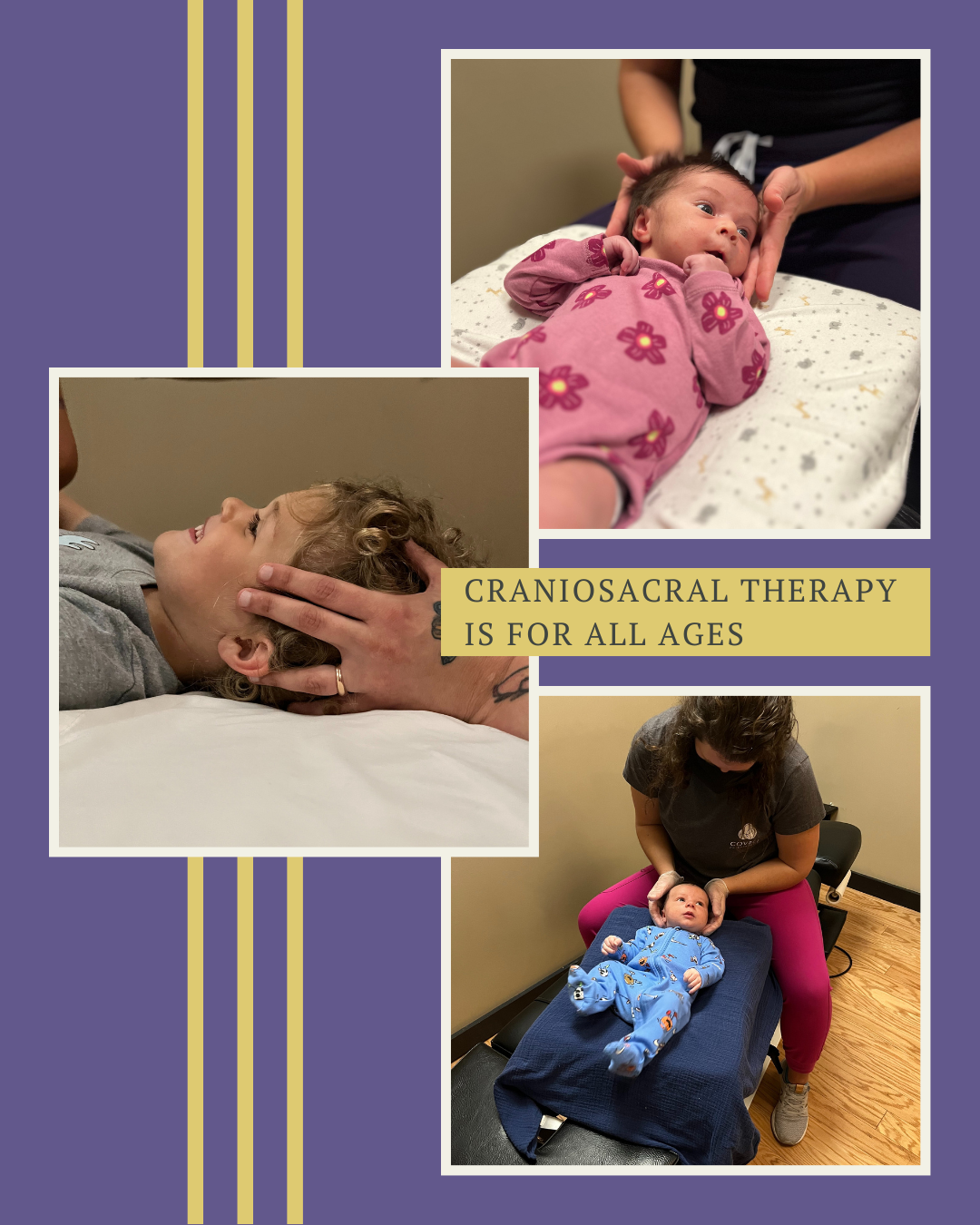
Craniosacral therapy is one of our offerings for infants and kids.
Why crawling is an important milestone for infant development:
Crawling on hands and knees (also called cross-cross crawling or cross crawling) requires limbs from opposite sides of the body to communicate with each other. This motion is vital to develop an area of the brain called the corpus callosum. It’s the portion of the brain that allows communication between the right and left hemispheres.
Cross crawling involves coordinated movements of eyes, ears, hands, feet and core muscles.
Cross crawling requires baby to move a limb to the opposite side of the body. This helps:
Low back strength to get ready to stand
Prepares ankles for flexion to get ready for waking
Begins spinal rotation
Strengthens hand-eye coordination
If baby is using other ways to crawl (scooting, using one foot/knee to push along, crab crawling, or rolling) they may be compensating for various reasons. It may be time to find a practitioner like a pediatric chiropractor who can help find ways to encourage cross crawling
Like
Comment